![How to Become a Florist: A Complete Guide [PRO]](https://res.cloudinary.com/liaison-inc/image/upload/f_auto/q_auto:eco,w_1200:eco,w_1200/v1764770777/content/fash/fash-how-to-become-a-florist-working-on-flower-arrangement.jpg)
How to Become a Florist: A Complete Guide [PRO]
How to Become a Florist: A Complete Guide [PRO]

How do you become a florist?
If you love being creative and working with nature, a career as a florist might be the perfect fit. Florists design arrangements that help people celebrate, remember, and connect during life’s biggest moments — weddings, birthdays, anniversaries, and more.
The best part? Becoming a florist is more accessible than many people think. Most florists start with hands-on experience and build skills on the job rather than through formal education. This guide covers everything you need to know about how to become a florist, from your first steps to building a successful career in floral design.
What does a florist do?
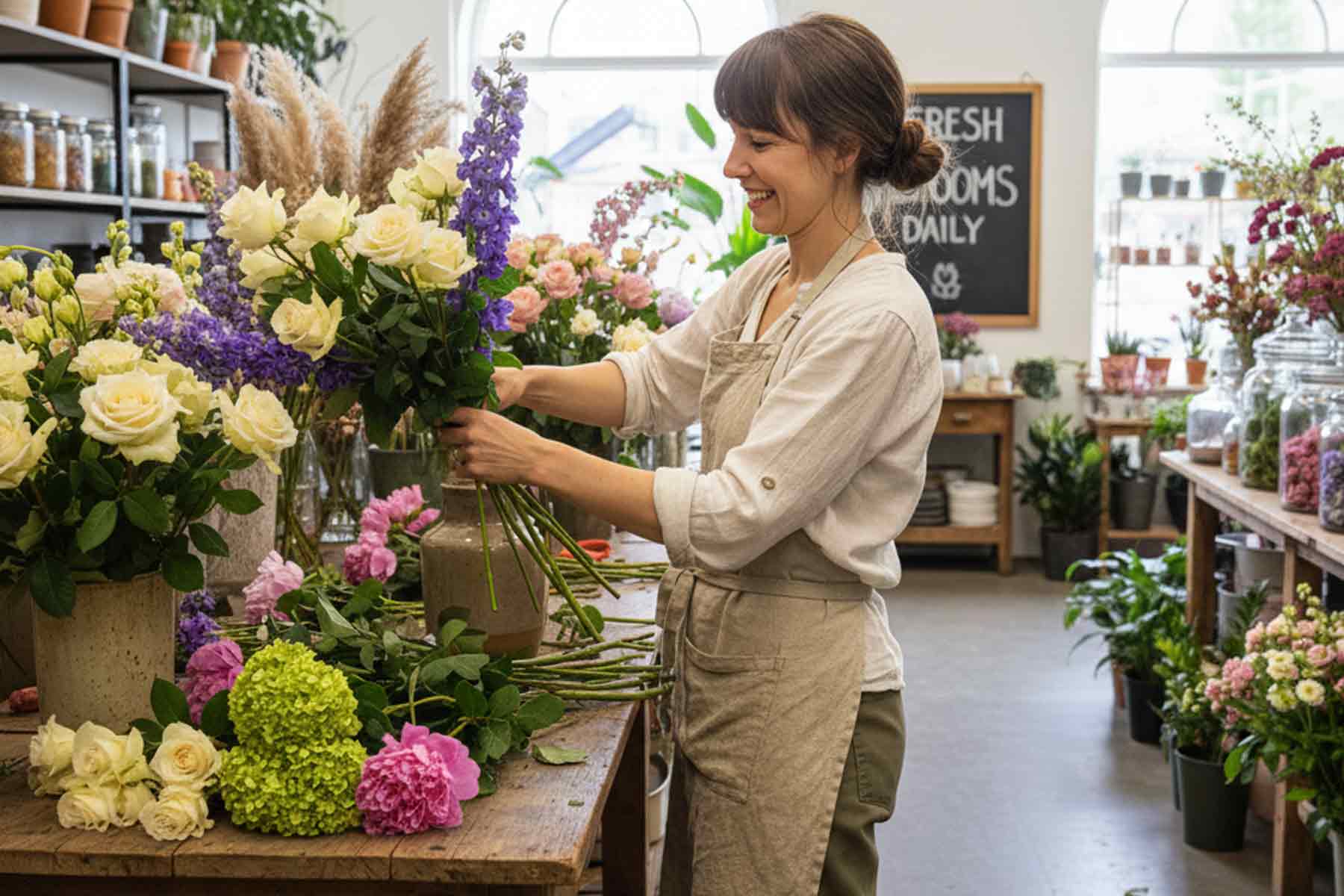
Florists are creative professionals who design, arrange, and sell flowers and plants for special occasions and everyday enjoyment. A typical day may include:
Selecting and conditioning fresh flowers
Creating custom arrangements and bouquets
Assisting customers with design choices
Processing deliveries and maintaining freshness
Managing inventory, pricing, and shop displays
The job requires physical stamina since you'll be on your feet for extended periods, lifting heavy buckets, and working in cool temperatures to preserve flower freshness. Peak seasons like Valentine's Day, Mother's Day, and wedding season can mean longer hours and faster-paced work.
Step 1: Complete your basic education
Most florist positions require at least a high school diploma or GED. While you're in school, focus on courses that build relevant skills for your future career in floral design. Helpful classes include:
Biology: plant care and growth
Art & design: color theory, composition
Business & math: pricing, inventory, shop management
These foundational skills support both the artistic and business sides of floristry.
Step 2: Gain hands-on experience
Real-world experience matters more than almost anything else when learning how to become a florist. Start by seeking entry-level positions at local flower shops, grocery store floral departments, or garden centers. Many shops hire beginners and provide on-the-job training.
You'll start with basic tasks like processing flowers, cleaning workspaces, and assisting with simple arrangements. This hands-on learning teaches you flower handling, care techniques, and customer service skills that no classroom can fully replicate.
Consider volunteering for community events where you can practice arranging flowers or offering to create centerpieces for friends' celebrations. Each arrangement you create builds your skills and confidence.
Finding apprenticeship opportunities
Working alongside an experienced florist through an apprenticeship or mentorship accelerates your learning dramatically. You'll observe professional techniques, learn industry shortcuts, and understand how to handle challenging design requests.
Don’t hesitate to ask shop owners if they offer mentorship or assistant roles. The industry values enthusiasm!
Step 3: Pursue formal training (optional but beneficial)
While not required, floral education can sharpen your skills and make you more competitive. Look for programs covering sympathy design, wedding work, and retail flower management.
Options include:
| Training type | Length | What you'll learn |
|---|---|---|
| Certificate programs | Weeks to months | Techniques; flower ID, event design; |
| Associate degrees | 2 years | Business skills + horticulture |
| Bachelor’s programs | 4 years | Advanced floral design + operations |
| Online courses | Flexible | Self-paced skill development |
Step 4: Consider professional certification
Professional certifications aren't mandatory, but can help you stand out, particularly for high-end and event floristry. Recognized industry credentials include:
Certified Floral Designer (CFD) from the American Institute of Floral Designers
Professional certifications from the Society of American Florists
These programs assess both technical skill and design knowledge and signal professionalism to employers and clients.
Preparing for certification exams pushes you to refine your techniques and expand your knowledge.

Step 5: Develop essential florist skills
Becoming a successful florist requires blending artistry, technical knowledge, and customer care.
Creative and design skills
Florists must have an artistic eye and understand design principles like balance, proportion, and color harmony. You'll need to visualize how different flowers and greenery work together to create cohesive, beautiful arrangements that match various themes and occasions.
Stay current with floral design trends to ensure you offer fresh, appealing styles. Follow industry leaders on social media, attend trade shows, and study seasonal color palettes to keep your work contemporary and sought-after.
Technical knowledge
Understanding flower varieties, their seasonal availability, and proper care methods is fundamental. You'll need to know which flowers last longest, which are fragile, and how to condition stems properly to extend vase life.
Learn to:
Identify flowers by sight.
Understand their meanings and symbolism.
Know which combinations work well together.
Familiarity with floral tools like shears, wire, tape, and foam becomes second nature with practice.
Customer service abilities
Strong interpersonal skills help you understand what customers want, even when they struggle to articulate their vision. You'll often work with clients during emotional times, whether they're celebrating or grieving, so empathy and patience matter greatly.
Communication skills enable you to:
Ask the right questions.
Offer helpful suggestions.
Manage expectations regarding pricing and availability.
Building relationships with regular customers creates a loyal client base that returns for all their floral needs.
Step 6: Build your portfolio and network
Your portfolio showcases your style, versatility, and skill level to potential employers or clients. Take high-quality photos of every arrangement (both paid and practice). Organize your portfolio by category:
Weddings
Sympathy arrangements
Event installations
Everyday bouquets
A clear portfolio helps employers and clients quickly recognize your strengths.
Networking in the floral industry
Connect with other florists, event planners, wedding coordinators, and venue managers. These relationships can lead to job opportunities, referrals, and collaborative projects that expand your business.
Join professional organizations like the Society of American Florists or your state's floral association. Attend workshops, trade shows, and industry events where you can learn new techniques and meet professionals who might become mentors or business partners.
Florist career options
Your career as a florist can grow in many directions depending on your interests and goals:
Retail florist shop designer
Event and wedding florist
Freelance floral designer (home studio or mobile)
Wholesale florist supplier
Floral educator or workshop instructor
Flower shop owner
Each specialty offers unique creativity and income potential.
If your dream of becoming a florist includes eventually working for yourself, check out our in-depth guide on how to start a floral business.
How much do florists make?
Your earning potential as a florist depends on your location, experience level, and whether you work for someone else or own your business. Urban areas with higher costs of living typically offer better wages than rural locations. The table below shows typical florist earnings in the U.S.:
| Career stage | Average hourly rate | Average annual salary | Notes |
|---|---|---|---|
| Entry-level | $12 – $14 | $25,000 – $29,000 | Basic shop tasks |
| Early career | $14 – $17 | $29,000 – $35,000 | Growing design skills |
| Mid-career | $16 – $20 | $33,000 – $42,000 | Event work; returning clients |
| Experienced | $18 – $24 | $37,000 – $50,000 | Senior/lead designer roles |
| Business owner | Widely varies | $40,000 – $100,000+ | Based on market + workload |
Florists who specialize in luxury weddings or own successful shops often earn significantly more but carry greater financial risk.
Step 7: Stay current and continue learning
The floral industry constantly evolves with new trends, techniques, and flower varieties. To keep your work fresh:
Attend workshops and trade shows.
Take advanced technique courses.
Follow floral designers and industry publications.
Join online communities where florists share ideas and inspiration.
Experiment with seasonal flowers and trending styles.
Continuous learning keeps you competitive and creatively inspired.
Taking your first steps into floristry
Starting your journey to become a florist doesn't require a perfect plan or extensive resources. Begin where you are with what you have. Apply for entry-level positions at local shops, even if you feel underqualified.
Practice arranging flowers at home using grocery store blooms. Watch online tutorials, read books about floral design, and experiment with different styles. Every arrangement you create, even small ones, builds your skills and confidence.
The most important step is simply to start. Your passion for flowers combined with dedication to learning will carry you forward into a fulfilling career bringing beauty and joy to others through your floral artistry.
FAQs about becoming a florist
How long does it take to become a florist?
You can begin working as a florist within a few weeks or months of hands-on training. Formal education may take 6 to 24 months.
Do florists need a business license?
If you open your own flower shop or freelance, you’ll need standard business licensing and permits depending on your state or city.
Is being a florist hard?
Being a florist is physically active and fast-paced, especially during holidays. However, it can be incredibly fulfilling for those who love creativity and customer connection.
Using our proprietary cost database, in-depth research, and collaboration with industry experts, we deliver accurate, up-to-date pricing and insights you can trust, every time.