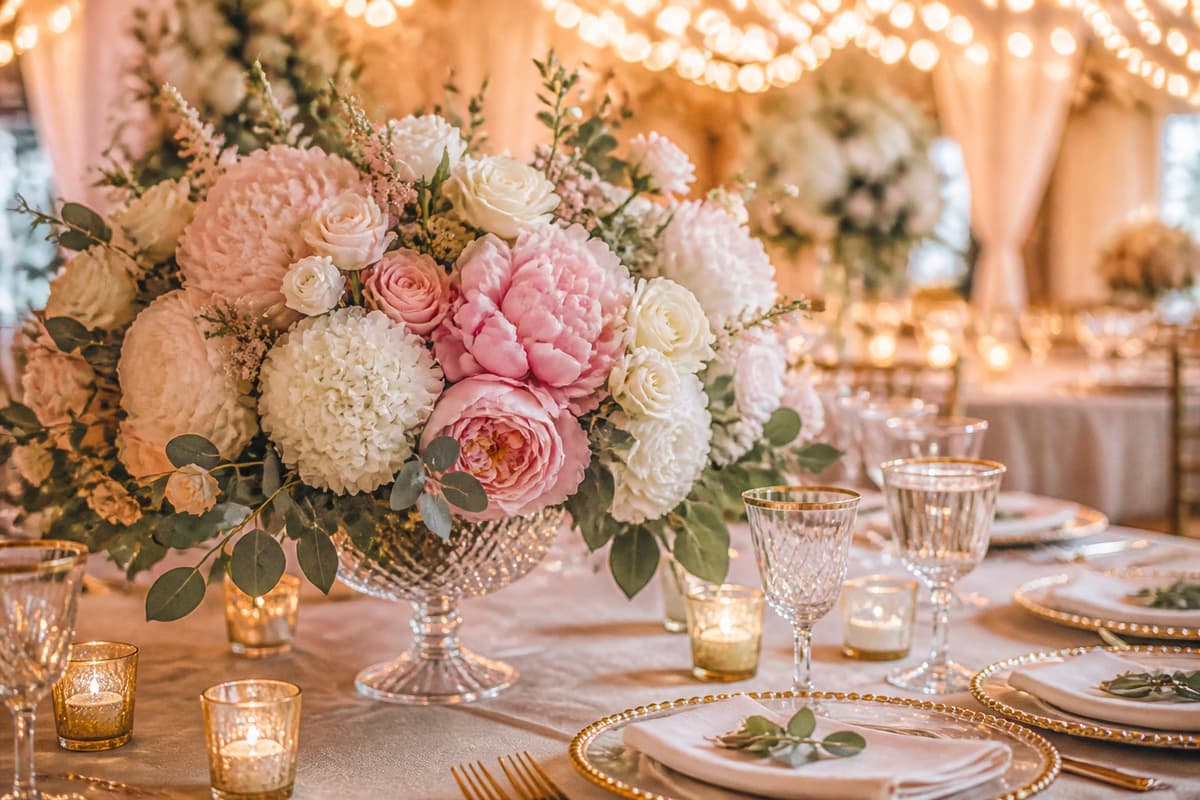
Best Artificial Flowers for Wedding: The Complete Guide
Best Artificial Flowers for Wedding: The Complete Guide
$3 – $10 per stem (real touch)
$1 – $6 per stem (standard silk)
$1 – $12 per stem (all types)

Best Types of Artificial Flowers for Weddings
The best artificial flowers for weddings are real touch roses, silk peonies, faux hydrangeas, and artificial eucalyptus greenery. These options look remarkably lifelike, photograph beautifully, and can save couples 40% to 70% compared to fresh floral arrangements. Whether you are building bridal bouquets, decorating ceremony aisles, or styling reception centerpieces, today's high-quality faux flowers are nearly indistinguishable from real blooms.
Choosing artificial flowers for your wedding is no longer a compromise. Advances in materials like real touch latex, premium silk, and hand-painted detailing mean that faux florals now rival the beauty of fresh-cut stems. They also offer benefits that fresh flowers simply cannot: they won't wilt in heat, they are available in any color year-round, and you can keep them as a lasting keepsake.
| Flower Type | Best For | Average Cost per Stem |
|---|---|---|
| Real touch roses | Bridal bouquets, centerpieces | $3 – $8 |
| Silk peonies | Bouquets, head table arrangements | $4 – $10 |
| Faux hydrangeas | Large arrangements, aisle decor | $5 – $12 |
| Artificial eucalyptus | Greenery garlands, bouquet filler | $2 – $6 |
| Silk lilacs | Spring weddings, garden themes | $3 – $7 |
| Faux gypsophila (baby's breath) | Rustic weddings, bouquet accents | $2 – $5 |
| Latex tulips | Minimalist bouquets, modern decor | $2 – $6 |
| Sola wood flowers | DIY brides, vintage themes | $1 – $4 |
Silk Flowers
Silk flowers remain the most popular category of artificial wedding flowers. High-quality silk blooms feature realistic petal textures, subtle color gradients, and flexible stems that allow for natural-looking arrangements. Premium silk flowers use multiple layers of fabric to mimic the depth and dimension of real petals.
When shopping for silk flowers, look for stems with graduated coloring rather than uniform, flat tones. The best silk blooms include slight imperfections, like a slightly curled petal edge or a touch of brown on a leaf tip, that mirror what you would see in nature.
Real Touch Flowers
Real touch flowers are made from a latex or polyurethane coating that gives petals a soft, lifelike feel. When guests touch these blooms, they often cannot tell they are not real. Real touch roses, peonies, and tulips are especially convincing because their petals have a slight moisture-like sheen.
These flowers typically cost more per stem than standard silk options, but the investment pays off in photographs. Real touch petals catch light the same way fresh flowers do, eliminating the plastic sheen that gives away lesser artificial flowers.
Sola Wood Flowers
Sola wood flowers are crafted from the dried pith of the tapioca plant and can be shaped into roses, dahlias, peonies, and other blooms. They are extremely lightweight, accept dye beautifully, and offer a slightly rustic, organic texture that works well for bohemian and vintage wedding themes.
These flowers come undyed, so brides can customize them to match any color palette. However, the dyeing process requires some DIY effort. Pre-dyed and pre-arranged options are available for couples who prefer a hands-off approach.
Order sample stems before committing to a bulk purchase. Sola wood flowers absorb dye differently depending on petal thickness, so testing your exact color on a sample ensures you get the shade you want for your wedding day.
Why Real Touch Flowers Are Worth the Investment
Real touch artificial flowers are the gold standard for wedding florals because they combine visual realism with a tactile quality that fools even the most discerning eye. They cost $3 to $10 per stem on average, which is more than basic silk but significantly less than premium fresh flowers from a florist.
| Feature | Real Touch Flowers | Standard Silk Flowers |
|---|---|---|
| Petal texture | Soft, slightly moist feel | Smooth fabric feel |
| Visual realism | Excellent; mimics fresh petals | Good; may appear shiny |
| Cost per stem | $3 – $10 | $1 – $6 |
| Photography performance | Catches light naturally | Can show fabric sheen |
| Durability | Very durable; latex resists creasing | Durable; may crease over time |
| Best varieties | Roses, peonies, tulips, calla lilies | Hydrangeas, lilacs, wildflowers |
The latex coating on real touch petals absorbs and reflects light in the same way organic plant tissue does. This means your wedding photos will look natural without any post-processing to hide artificial-looking blooms.
Real touch flowers also hold their shape better in extreme temperatures. Fresh flowers wilt in summer heat or freeze in winter cold, while real touch blooms look identical from the first look to the last dance.
Most Popular Artificial Wedding Flowers by Variety
Roses, peonies, and hydrangeas are the three most popular artificial flowers chosen by brides. These varieties are classic wedding staples that are widely available in high-quality faux versions. The right combination of focal flowers, secondary blooms, and greenery creates a balanced, professional-looking arrangement.
| Flower | Wedding Style | Season | Average Cost per Stem |
|---|---|---|---|
| Roses | Classic, romantic, modern | All seasons | $3 – $8 |
| Peonies | Romantic, garden, whimsical | Spring, summer | $4 – $10 |
| Hydrangeas | Elegant, classic, garden | Summer, fall | $5 – $12 |
| Ranunculus | Romantic, vintage, bohemian | Spring | $3 – $7 |
| Calla lilies | Modern, minimalist, elegant | All seasons | $3 – $8 |
| Dahlias | Bohemian, fall, garden | Late summer, fall | $4 – $9 |
| Anemones | Modern, dramatic, art deco | Spring, winter | $3 – $7 |
| Baby's breath | Rustic, minimalist, country | All seasons | $2 – $5 |
Roses
Roses are the most timeless wedding flower, and artificial versions are available in virtually every color, from crisp white and blush pink to deep burgundy and dusty mauve. Real touch open roses with slightly unfurled petals look the most realistic because they replicate the way a rose looks at its most beautiful stage of bloom.
For bridal bouquets, look for full-headed garden rose styles rather than tight bud varieties. Garden roses have a lush, voluminous look that photographs well and makes bouquets appear full without requiring dozens of stems.
Peonies
Peonies are one of the most requested wedding flowers, but fresh peonies are only available for a few weeks each year and can cost $8 to $15 per stem from a florist. Artificial peonies solve this problem entirely. High-quality silk or real touch peonies cost $4 to $10 per stem and are available year-round in every color.
The rose and peony combination is the most popular wedding flower pairing. Both flowers share a rounded, full shape that creates lush, romantic bouquets, and their artificial versions complement each other perfectly.
Hydrangeas
Faux hydrangeas are ideal for filling large arrangements because each bloom head is substantial. A single artificial hydrangea stem can occupy the same visual space as three or four smaller flowers, making them a cost-effective choice for centerpieces and ceremony arches.
White hydrangeas paired with eucalyptus greenery create a classic, elegant look. For a more contemporary style, try dusty blue or mauve hydrangeas mixed with pampas grass.
Greenery and Foliage
Greenery is the foundation of any wedding floral arrangement. Artificial eucalyptus is the most versatile option, available in spiral, seeded, and silver dollar varieties. It adds contrast, texture, and shape to bouquets and centerpieces while creating a lush, organic look.
Italian ruscus, preserved plumosus fern, and faux olive branches are excellent alternatives for couples who want a softer, more whimsical feel. Mixing two or three types of greenery adds depth and dimension to every arrangement.
How to Make an Artificial Wedding Bouquet
Building a beautiful artificial wedding bouquet requires the right supplies, a clear plan for your color palette, and about one to two hours of assembly time. Most DIY brides spend $50 to $150 on materials for a bridal bouquet, compared to $200 to $500 for a comparable fresh bouquet from a professional florist.
| Supply | Purpose | Average Cost |
|---|---|---|
| Focal flowers (8 to 12 stems) | Main blooms like roses and peonies | $30 – $80 |
| Secondary flowers (5 to 8 stems) | Accent blooms like ranunculus and anemones | $15 – $40 |
| Greenery (5 to 10 stems) | Eucalyptus, ruscus, filler foliage | $10 – $30 |
| Wire cutters | Cutting artificial stems and floral wire | $5 – $15 |
| Floral tape | Binding stems together securely | $3 – $5 |
| Ribbon or fabric wrap | Finishing the handle | $5 – $15 |
| Pins or a brooch (optional) | Decorative handle detail | $3 – $10 |
Step-by-Step Instructions
Follow these steps to assemble a professional-looking artificial bridal bouquet:
- Prepare your stems. Open out all leaves and blossoms so they look natural. Smooth out any creases in the petals or leaves. Lay everything out by type so you can see your full collection.
- Build the base. Gather two or three of your largest focal flowers, such as roses or peonies. Hold them at the stems and position the blooms at slightly different heights for a natural look. Secure them with a small piece of floral tape.
- Add secondary flowers. Surround the base with your accent blooms, rotating the bouquet as you go. Insert each stem at a slight angle, spiraling outward. This creates the rounded dome shape that defines a classic bridal bouquet.
- Incorporate greenery. Tuck eucalyptus, ruscus, or fern around the outer edges. Let some pieces extend slightly beyond the flowers to create movement and texture. Greenery should frame the flowers, not compete with them.
- Secure the arrangement. Wrap the entire stem bundle tightly with floral tape from just below the blooms down to the bottom of the stems.
- Trim the stems. Use wire cutters to cut all stems to a uniform length, typically 6 to 8 inches below the floral tape. Make sure no sharp wire edges are exposed.
- Wrap the handle. Starting at the top of the taped area, wrap your chosen ribbon tightly around the handle. Secure with pins, hot glue, or a decorative brooch at the bottom.
Build your bouquet at least two to three months before the wedding. This gives you time to order additional stems if needed, make adjustments, and practice your technique. Since artificial flowers do not expire, early preparation is one of the biggest advantages of going faux.
Popular Color Palettes
Choosing a cohesive color palette is essential for a polished look. Here are some of the most popular wedding color combinations for artificial bouquets:
- Romantic blush: soft pink roses, cream peonies, white ranunculus, and silver dollar eucalyptus
- Classic white: white hydrangeas, ivory roses, white peonies, and green eucalyptus
- Dusty earth tones: mauve roses, terracotta dahlias, burgundy ranunculus, and olive branch greenery
- Modern neutral: cream roses, beige dried-look pampas grass, white anemones, and bleached ruscus
- Bold jewel tones: deep red roses, plum dahlias, navy anemones, and dark green foliage
Where to Use Artificial Flowers at Your Wedding
Artificial flowers can be used in every area of your wedding, from the ceremony to the reception. Because they are lightweight and pre-assembled, faux arrangements are easier to transport and set up than fresh flowers. They also hold up perfectly for outdoor weddings in heat, wind, or cold.
| Application | Recommended Flowers | Estimated DIY Cost |
|---|---|---|
| Bridal bouquet | Real touch roses, silk peonies, eucalyptus | $50 – $150 |
| Bridesmaid bouquets (each) | Smaller versions of bridal bouquet | $25 – $75 |
| Ceremony arch or arbor | Hydrangeas, roses, trailing greenery | $100 – $400 |
| Aisle decorations | Petals, small arrangements, greenery garlands | $50 – $200 |
| Centerpieces (each) | Mixed arrangements in vases or compotes | $20 – $60 |
| Head table garland | Eucalyptus, roses, trailing ivy | $75 – $200 |
| Cake flowers | Small blooms, greenery sprigs | $10 – $30 |
| Hair accessories | Mini roses, baby's breath, small blossoms | $10 – $25 |
Ceremony Decor
Ceremony arches are one of the most impactful places to use artificial flowers. A well-designed faux floral arch creates a stunning backdrop for photos and sets the tone for the entire event. Build clusters of flowers at the top corners or along one side of the arch for an asymmetrical, modern look.
For aisle decorations, attach small artificial arrangements to the ends of pew rows or chairs with ribbon. Scatter silk petals along the aisle for added romance. Unlike real petals, artificial petals will not stain dresses or walkways.
Reception Decor
Centerpieces are where artificial flowers truly shine from a budget perspective. Fresh centerpieces for 20 tables can easily cost $2,000 to $5,000 from a florist. DIY faux centerpieces for the same number of tables typically cost $400 to $1,200.
Consider mixing artificial flowers with real greenery for a hybrid approach that adds natural fragrance while keeping costs down. Eucalyptus and fern are affordable fresh options that pair well with faux focal flowers.
Tips for Making Artificial Flowers Look Real
The difference between artificial flowers that look stunning and ones that look obviously fake comes down to a few key techniques. Attention to detail in stem positioning, color selection, and arrangement style can make faux flowers virtually indistinguishable from fresh blooms, both in person and in photos.
| Technique | Impact on Realism |
|---|---|
| Bend stems at natural angles | Eliminates stiff, uniform look |
| Mix bloom stages (buds, half-open, full) | Mimics how real flowers grow |
| Use varied greenery | Adds organic texture and depth |
| Add imperfections | Real flowers are never perfect |
| Choose muted, natural tones | Avoids artificially bright colors |
| Use opaque vases for arrangements | Hides artificial stems and bases |
| Mist with water before photos | Creates dewy, just-picked appearance |
Styling Tricks From the Experts
- Vary the heights. Never line up all flower heads at the same level. Stagger blooms at different heights for a natural, garden-picked aesthetic.
- Bend and shape every stem. Artificial stems have flexible wire inside. Curve them gently so they arc outward like real flowers reaching for sunlight.
- Mix bloom stages. Combine tight buds, partially open flowers, and full blooms. Real flower arrangements always feature multiple stages of development.
- Open and fluff petals. When flowers arrive from shipping, gently pull petals outward and reshape any that have been compressed. Smooth out creases in leaves.
- Add a light mist of water. Right before photographs, lightly mist your bouquet with a spray bottle. Small water droplets on petals create the fresh, dewy look of real flowers.
- Choose matte over shiny. Avoid flowers with an obvious plastic sheen. The best artificial flowers have a matte or slightly satin finish that replicates natural petal surfaces.
Do not use uniformly colored flowers. Real blooms have subtle variations in tone, from darker centers to lighter petal tips. Look for artificial flowers with graduated coloring, veining, and slight color irregularities for maximum realism.
Real Flowers vs. Artificial Flowers for Weddings
The average American couple spends $2,500 to $5,000 on fresh wedding flowers. Artificial flowers can reduce that cost to $300 to $1,500 for a full wedding's worth of florals, depending on quality and quantity. Beyond cost, faux flowers offer practical advantages that make them increasingly popular with modern couples.
| Factor | Fresh Flowers | Artificial Flowers |
|---|---|---|
| Average total wedding cost | $2,500 – $5,000 | $300 – $1,500 |
| Longevity | 3 to 7 days | Indefinite |
| Seasonal availability | Limited by season | Any flower, any time |
| Allergen-free | No | Yes |
| Weather sensitivity | Wilts in heat and cold | Unaffected |
| Setup timing | Day of or day before | Weeks or months ahead |
| Fragrance | Natural scent | None (can add essential oils) |
| Keepsake potential | Requires preservation | Ready to display forever |
| Color accuracy | Natural variation | Exact match guaranteed |
Advantages of Artificial Flowers
- Significant cost savings: faux flowers cost a fraction of fresh, especially for out-of-season blooms like peonies in winter
- No wilting or browning: perfect for destination weddings, outdoor ceremonies, and long photography sessions
- Advance preparation: bouquets and arrangements can be assembled months ahead, eliminating last-minute stress
- Allergy-friendly: ideal for brides, grooms, and guests with pollen sensitivities
- Lasting keepsake: your bridal bouquet can be displayed in your home for years
- Color matching: exact shades can be matched to bridesmaid dresses, invitations, and decor
Considerations Before Choosing Faux
- No natural fragrance: artificial flowers have no scent, though some brides add a few drops of essential oil to their bouquets
- Quality varies widely: budget faux flowers can look obviously fake, so investing in premium options is important
- Upfront research required: ordering samples and testing quality takes time, though this effort pays off in results
- Some venues may have policies: check with your venue to confirm that artificial flowers are permitted, especially for ceremony spaces
Best Places to Buy Artificial Wedding Flowers
The best retailers for wedding-quality artificial flowers include specialty online shops, craft stores, and wholesale suppliers. Prices and quality vary significantly between sources, so ordering samples before committing to large purchases is essential.
| Retailer | Best For | Price Range per Stem |
|---|---|---|
| Afloral | Premium real touch and silk flowers, DIY brides | $3 – $12 |
| The Faux Flower Company | Ultra-realistic, hand-painted premium stems | $8 – $20 |
| Ling's Moment | Pre-made bouquets and bundles, budget-friendly | $2 – $8 |
| Sola Wood Flowers | DIY brides, custom dyeing, vintage themes | $1 – $4 |
| Michael's | Budget stems, in-store browsing, craft supplies | $1 – $8 |
| Hobby Lobby | Affordable silk flowers, frequent sales | $1 – $7 |
| Amazon | Wide selection, bulk purchases, fast shipping | $1 – $10 |
| Etsy | Handmade, custom bouquets, unique varieties | $5 – $15 |
Shopping Tips
- Order samples first. Buy one or two stems before placing a large order. Colors can look different in person than they do on screen.
- Read reviews with photos. Customer photos give a far more accurate representation of quality than professional product images.
- Watch for sales. Craft stores like Michael's and Hobby Lobby regularly offer 40% to 50% off artificial flowers. Stock up during these sales to stretch your budget.
- Check return policies. Make sure you can return stems that do not meet your quality expectations.
- Order extra. Buy 10% to 15% more stems than you think you need. Having extras allows for creative flexibility and covers any stems that arrive damaged.
Frequently Asked Questions
Do artificial wedding flowers look real in photos?
Yes. High-quality real touch and premium silk flowers are nearly indistinguishable from fresh flowers in professional photographs. The key is choosing flowers with natural color gradients, matte finishes, and realistic petal textures. Misting your bouquet with water before photos adds a dewy, fresh-picked look.
How much do artificial wedding flowers cost compared to real flowers?
Artificial wedding flowers typically cost $300 to $1,500 for a complete wedding, including bouquets, centerpieces, and ceremony decor. Fresh flowers for the same scope usually cost $2,500 to $5,000. That represents savings of 40% to 70% for most couples.
| Floral Package | Fresh Flowers | Artificial Flowers | Potential Savings |
|---|---|---|---|
| Full wedding (bouquets, ceremony, reception) | $2,500 – $5,000 | $300 – $1,500 | 40% – 70% |
| Bridal bouquet only | $200 – $500 | $50 – $150 | 60% – 75% |
| 20 table centerpieces | $2,000 – $5,000 | $400 – $1,200 | 60% – 80% |
Are fake flowers tacky for a wedding?
Not at all. The stigma around artificial wedding flowers has faded significantly as faux flower quality has improved. Today's premium artificial blooms feature hand-painted details, real touch textures, and realistic coloring. Many wedding guests cannot tell the difference, and even professional florists acknowledge the quality of top-tier faux flowers.
Can you mix real and artificial flowers?
Absolutely. Mixing fresh greenery like eucalyptus or ferns with artificial focal flowers is a popular hybrid approach. Fresh greenery adds natural fragrance and movement, while faux flowers provide the exact colors and varieties you want without worrying about wilting. This combination often delivers the best of both worlds.
How far in advance can you make artificial bouquets?
Artificial bouquets can be assembled months or even a year in advance. Store finished arrangements in a cool, dry location away from direct sunlight to prevent any color fading. Cover them loosely with a garment bag or tissue paper to keep dust off the petals.
How do you clean artificial flowers before the wedding?
Gently dust each stem with a soft brush